Look at the Pattern Before Choosing the Treatment
Dark trails can be associated with algae such as Gloeocapsa magma. Deltona’s warm, damp conditions can support growth, especially on sheltered roofing. A stain’s appearance provides a starting point, not a complete diagnosis.
From the ground, notice where the trails begin, which slope is most affected, and whether the discoloration has changed. These details explain your concern more clearly than simply asking for a dirty roof to be washed.
Rust, coating changes, and worn materials are different from organic growth. An algae treatment may not address them. We discuss those distinctions before setting expectations rather than promising one solution for every type of roof discoloration.
Treat the Growth, Review the Remaining Marks
Our treatment-based softwashing is intended for suitable organic staining, not aggressive roof scrubbing. The plan considers:
- 1Where the roof trails appear and how extensive they are
- 2The roofing material and any competing causes of discoloration
- 3Suitable application around delicate or worn areas
- 4Low-pressure treatment and rinsing of agreed roof surfaces
- 5Any marks that remain and signs to watch for later
Why Identify the Stain Before Washing?
- Choose treatment aimed at the organic growth present
- Address the marks that distract from the roof’s appearance
- Prioritize staining within a wider maintenance plan
- Discuss the specific areas mentioned in an HOA notice
- Avoid treating roofing like a pressure-cleaned driveway
- Recognize rust and finish wear as separate concerns
- Understand likely limits before deciding to book
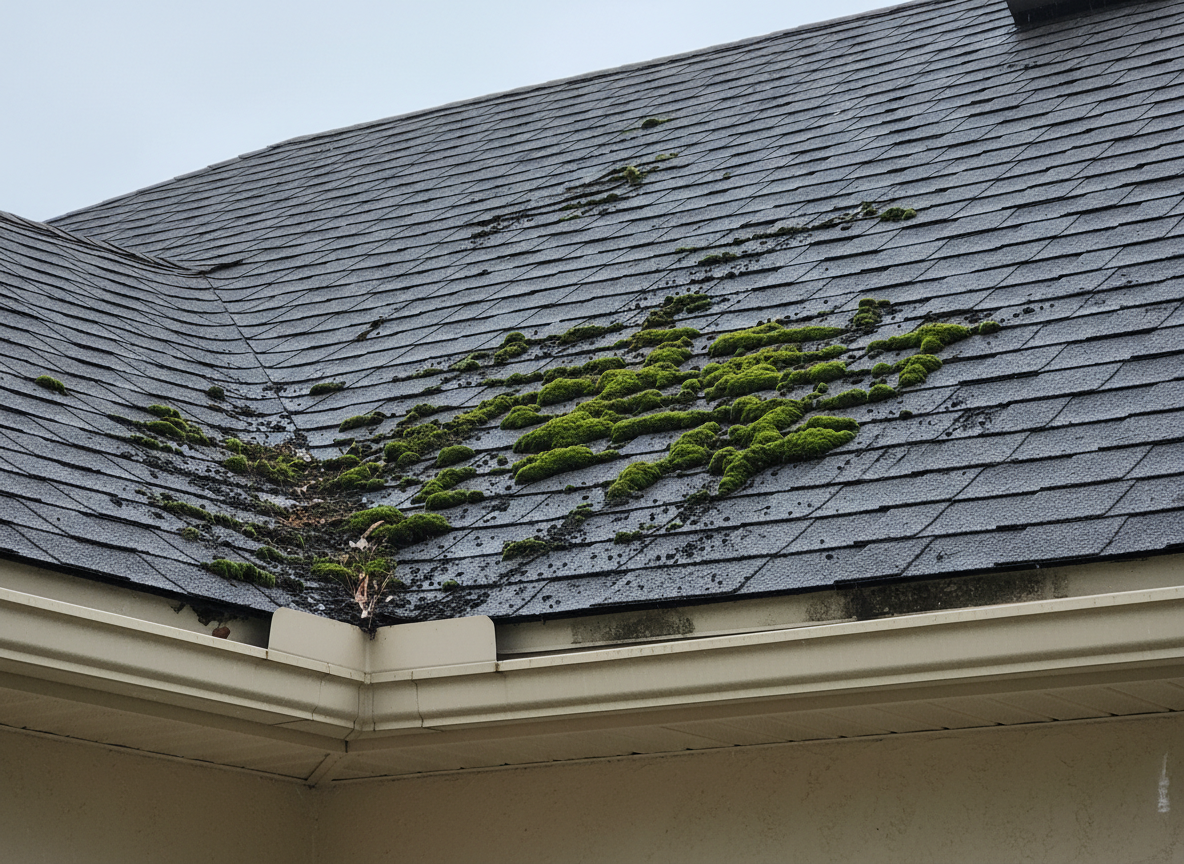
One Roof Can Show Two Different Conditions
A sheltered rear slope can show pronounced trails while a sunny front section still appears clear. Mention that contrast in your request. Ground-level observations are enough to start the discussion; do not climb onto the roof to inspect a stain.